Showing posts with label K. M. Lockwood. Show all posts

Sunday, 19 October 2014

Drawn to art

Gua Tewet, the tree of life, Borneo, Indonesia.
- an inspiration piece by  K. M. Lockwood


Human beings are compelled to create art. Some of our earliest surviving creations are paintings and to the best of my knowledge, every society has made marks that show recognisable beings. We are naturally visual - up to two thirds of our brain can be involved in processing what we see. So it's really not surprising that children love drawing - and pictures in books.

We give babies [quite rightly] books which are all images. Then as children age, the pictures give way to words. Sadly, it seems that in our culture, as the storytelling grows in difficulty, the illustrations diminish. I realise I am preaching to the converted, but I do wish there were more pictures in books for older children and young people everyone.

I wonder if this may be partly why boys often favour non-fiction: it's acceptable to have diagrams and charts and pictures if it's a fact book. Likewise, look at the appeal of joyously colourful comics, and the intensity found in graphic novels. People of all ages and stages are passionate about them.
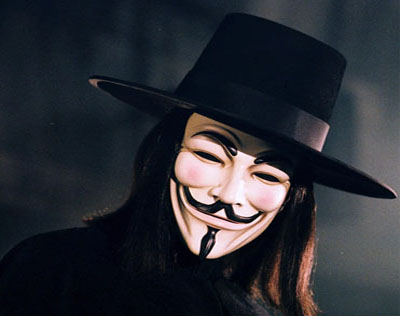
V for Vendetta by Vendetta666 on Deviant Art

Here in SCBWI  we really know the complementary nature of Words and Pictures! But what can authors learn from artists? We already share a lot in terms of creativity - but what else can be learnt from the practice of drawing? Here are three thoughts:

  • life studies imply truly looking at the world. We don't have to go as far as Turner and lash ourselves to a mast to experience a storm at sea, but using our own viewpoint, not received wisdom, can deepen our understanding.
  • observation requires concentration. We need to pay attention to what lies beneath. What is the subtext of muscles below the skin of a conversation? Interactions have their own anatomy - and if we dissect real ones, we can create the imaginary.
  • sketch - accept that not everything you create will end up in the finished text. Allow some work to be scruffy, quick, unfinished. Let there be pieces from a point of view you will not use. Be experimental - and remember that all of it infuses the completed piece with depth. Nothing is wasted.
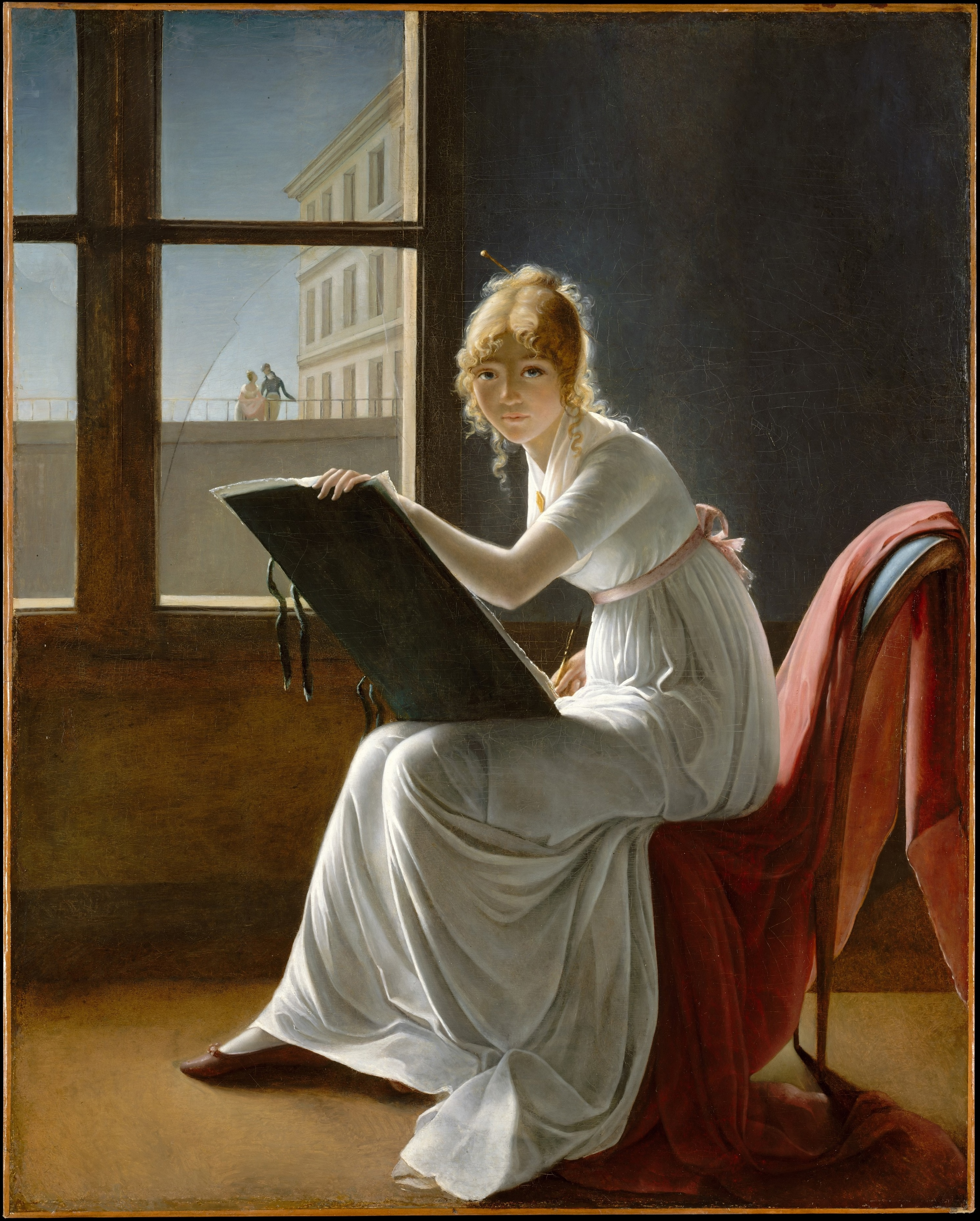
Young Woman Drawing, (1801, Metropolitan Museum of Art) painted by Marie-Denise Villers (possibly a self-portrait)

Suggestions
  • Go to an art gallery - many are free. You can always find a decent character or two - either in the portraits or in the viewers. 
  • Try moving a person in one painting to the setting in another. Is there a story in that?
  • If possible, watch an artist at work. If they don't mind, ask questions. Perhaps someone in your story world might paint or sketch.
  • Alternatively, doodle, colour in, gaze, trace - don't think about writing and be refreshed!
by  K. M. Lockwood - who posts on her blog from time to time,  often tweets from her garret, and writes and colours-in


Monday, 8 September 2014

Mixed Motives

An inspiration piece by K. M. Lockwood

Agatha Christie -
writer of 91 novels,
 not to mention the playscripts.


This month's theme is Motivation and Challenge. I want to break it down into the two parts to begin with, and against all alphabetical protocol, I'll go with Motivation first.


Motive for murder?
Motives are the driving forces that lead to action - as any detective writer knows. The word itself derives from the Latin movere - to move. Related words include [interestingly] emotion and motor. My mind jumps from there to motor skills - and muscle memory.

Bellydancer by Sean Thomas
As a belly dancer, I try to practise moves until they become automatic. I want my sinews and joints to remember how to taksim well, to follow a sequence of moves fluidly. I believe the same applies to writing, both figuratively and literally.

On one hand, practising, creating every day makes its own momentum. On the other, actually using the hands frees up many a creative person. Get marker pens, crayons, felt-tips, chalks - something physical to connect with your younger self. By-pass the cynical adult through motion.

Challenge

Hello. My name is Inigo Montoya.
 You killed my father. Prepare to die.
'Challenge' immediately summons up a duel in a misty forest at dawn for me. It has the sense of taking on something - it is the language of adversaries. I hear this a lot amongst rather fed-up creative people. Sometimes they mean an abstract concept - but often it is more personal.

Confronting  the Gatekeeper
 from Monty Python & the Holy Grail
We may see many obstacles blocking our way. It's tempting to feel you're outwitting an opponent, you're battling your way against others. It's a favourite storyline after all - the underdog who takes on the world and wins.

But I think this striving and pushing can be unhelpful. Seeing yourself always in opposition to someone else means you are not defining who you are. Like wet concrete inside shuttering - if the planks are removed, it oozes away into a lumpy mess.

Children on the beach at Kasai Rinkai Park
Listening to older and wiser people, I've learned two ways to avoid this. One: challenge only yourself to create better than you did before. Become your own judge. Two: partake in joyful competition. Think of dance-offs or racing to be the first in the water. Don't take it so seriously - mess about with friends. Challenge them with a lightness of heart.

Your two-part task
  1. Get a pen and paper, and a timer. In ten minutes, list as many motives for your writing or art as you can. Don't censor - just write. Leave in all the daft, the embarrassing, the pompous and downright weird reasons.
  2. Read them through. Consider which ones truly move you, and which belong to other people - be they real or your characters.
Child's Treasure Map of Brighton
by P. Fallows
Find your own drive. Explore your story world every day to find more wonders to seek after. Examine it with a magnifying glass, Mountaineer. Cave dive.  Let sharing the treasures you found there be the reason for talking about your work.

K.M.Lockwood is the writing name of Philippa R. Francis. She blogs quite often  from The Garret and gabbles away on Twitter as @lockwoodwriter.


Monday, 18 August 2014

Telling Tales

Abu Shady the last professional hakawati
or traditional storyteller in Syria 
In most cultures, the storyteller has an honoured place. Abu Shady here sits in the Al-Nawfara Coffee Shop Damascus. The reciter of Beowulf would have been given a warm spot by the fire. The whole horde in the great hall would fall silent when the first word 'Hwæt' was spoken and the well-known story 'held children from play'.


As the Anglo-Saxons knew, poetry helped people recite stories - through rhythm and alliteration, or rhyme. Movements and gesture, dance and other arts have all been used to convey the memory and wisdom of tribes through narrative. Engaging deeply with stories avoids the risk of that wisdom becoming trite, of becoming a stream of sound-bites only fit for tacky 'inspirational' posters. It is the shared going-through that embeds the sentiment in us - and the learning.

Kathak dancer - 'that which tells a story, that is 'Kathak'
Creative Commons
Story explores consequences. We learn their truths alongside our heroes and heroines, villains and tricksters, perplexed lovers and redeemed souls. A change of heart cannot be believed unless we truly know that heart and its many ways.

A burnt hand teaches best...
                                                     
                                                                                  it is said, yet when we truly live through a story, we share the learning without the worst of any pain or scarring. Storytellers, whether through words or pictures or both, invite their tribe to involve themselves in the drama. For our readers or viewers, gamers or listeners, the story must engage before any experience can happen. We owe it to them to use as much skill and honesty as we can. Otherwise, why bother? How else can we earn our place beside the hearth?

'Fireside' by Joseph Henry_Sharp, c.1900
Public domain, via Wikimedia Commons
A suggestion
You may wish to keep this exercise private - even so , I promise you that the emotions you evoke will strengthen your creativity.


Think back to something you learned the hard way.

What were your hopes - and what were your fears? What drove you to that point? Recall as many sounds and smells as you can. What about the time of day, the weather? Can you remember anything you touched or tasted?

Tell that story back to yourself in whatever way you find best. You might like to use a different persona if it's a really painful memory - or change one significant detail to take some of  the sting out of it. The important thing is the emotional sequence of that story - and its resolution in something learned.


K. M. Lockwood is a writing name of Philippa R. Francis. As well as being a regular contributor, Philippa (@lockwoodwriter) is also part of the Words & Pictures team as the @Words8Pictures Tweetmaster, growing our following and maintaining our 'Industry news' feed.

My Blog List